
Decolonial psychology: Academic and activist perspectives
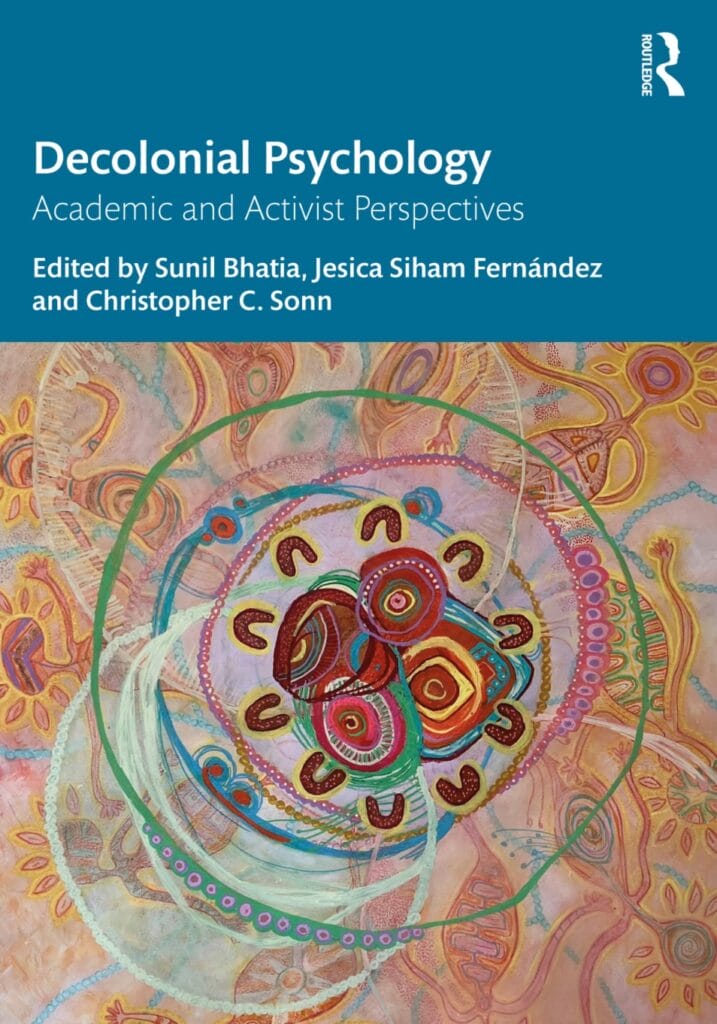
This cutting-edge book re-imagines what a truly decolonial psychology could look like. It explores questions of what counts as psychological knowledge and whose knowledge is valid, and who controls the production of knowledge in psychology. This book builds on the expanding knowledge base in decolonial psychology to meaningfully address the varied social and psychological trajectories […]
wangii wadhan biyay–Baskets of Listening and Respect
This chapter offers a meeting place (ganma) between Indigenous Australian knowledges and Western psychological practice; a framework for respectful, inclusive praxis that honours deep-time realisations and decolonises psychology by critically examining Eurocentric dominance and oppression. wangii wadhan biyay (baskets of listening and respect, Dhurga language) offers seven baskets of knowledge layers that must be in […]
Embracing Social and Emotional Wellbeing Can Create Transformational Change in Psychology
Aboriginal and Torres Strait Islander peoples are one of the oldest continuous living cultures in the world, with knowledge systems that promote harmonious collective wellbeing. Colonialism, including the historical role of imposed Western knowledges such as psychology, disrupted these knowledges. This caused devastating effects to the wellbeing of Aboriginal and Torres Strait Islander peoples. Today, […]
AIPEP Learning Resource: Working Together and the Psychology Board of Australia Professional Competencies for Psychology – Competency 8 Resource Map

The AIPEP Learning Resources aims to support Ahpra registered psychologists build their capacity to meet Psychology Board of Australia’s Professional Competency 8: Demonstrates a health equity and human rights approach when working with Aboriginal and Torres Strait Islander peoples. This online resource maps chapters from the Working Together (2014) textbook against the Psychology Board of […]
AIPEP Learning Resource: Psychology Board of Australia Professional Competencies for Psychology – Competency 8 Resource Map

The AIPEP Learning Resources aims to support Ahpra registered psychologists build their capacity to meet Psychology Board of Australia’s Professional Competency 8: Demonstrates a health equity and human rights approach when working with Aboriginal and Torres Strait Islander peoples. This online resource maps a wide range of Indigenous-led publications against Competency 8 sub competencies. Readers will […]
Epigenetic Echoes: Bridging Nature, Nurture, and Healing Across Generations

Trauma can impact individuals within a generation (intragenerational) and future generations (transgenerational) through a complex interplay of biological and environmental factors. This review explores the epigenetic mechanisms that have been correlated with the effects of trauma across generations, including DNA methylation, histone modifications, and non-coding RNAs. These mechanisms can regulate the expression of stress-related genes […]
Truth-telling and the Ancient University. Healing the Wound of Colonisation in Nauiyu, Daly River

This book shares a strength-based truth-telling model, which reveals the trauma associated with the experience of colonisation and the traditional healing practices specific to the Nauiyu Nambiyu community in Australia. It explores the significance of community placed on developing the ‘Ancient University’, an Aboriginal-based, stand-alone healing centre that incorporates traditional healing practices. This book outlines […]
Indigenous Knowledge and Mental Health

This text represents a wholly refreshing, important, challenging, and creative contribution to the literature addressing the impacts of colonization on the well-being of Indigenous Peoples and the role of Indigenous knowledge(s) in healing and wellbeing.
Traditional medicine plays a role alongside Western medicine

Indigenous cultures have successfully used traditional healers and bush medicine for thousands of years. Many of these practices continue to be used today. When dealing with Indigenous patients, it will help you to be aware of these practices and to understand why they are important to Indigenous Australians. You’ll also have the opportunity to learn […]
Ngangkari healers: 60,000 years of traditional Aboriginal methods make headway in medical clinics
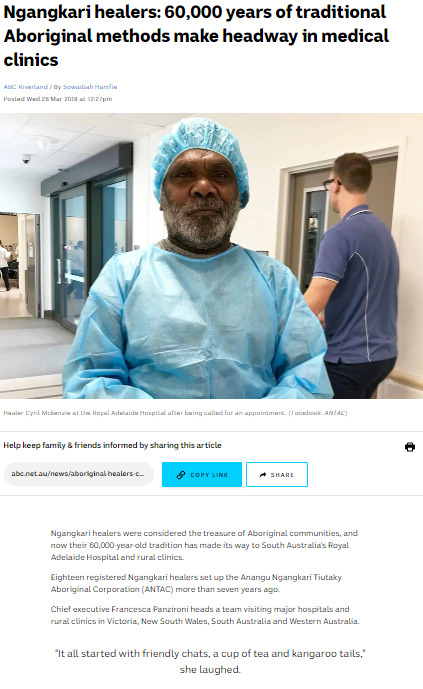
Ngangkari – Traditional Healers

Ngangkari are the traditional healers of the Ngaanyatjarra, Pitjantjatjara and Yankunytjatjara (NPY) lands in the remote western desert of Central Australia. Ngangkari have looked after people’s physical and emotional health for thousands of years. The NPY Women’s Council Ngangkari Program supports ngangkari to continue their work in communities, clinics and hospitals.