
Decolonising Applied Social Psychology: Culture, Indigeneity and Coloniality

The Final Quarter

Adam Goodes was a champion AFL footballer and Indigenous leader. In the final three years of his playing career he became a lightning rod for a heated public debate and widespread media commentary that divided the nation. He publicly called out racism, was named Australian of the Year, was accused of staging for free kicks, […]
Ethical conduct in research with Aboriginal and Torres Strait Islander Peoples and communities: Guidelines for researchers and stakeholders

Culturally informed case conceptualisation: Developing a clinical psychology approach to treatment planning for non-Indigenous psychologists working with Aboriginal and Torres Strait Islander clients

Background:In the context of the Australian Psychological Society’sformalapology and the increasing awareness of the need to develop interventions thatimprove the social and emotional wellbeing of clients who identify from Abo-riginal and Torres Strait Islander cultural backgrounds, this article considers theclinical psychology case conceptualisation. The primary aim of any case concep-tualisation is to inform intervention and, […]
Working Together with Remote Indigenous Communities to Facilitate Adapting to Using Energy Wisely: Barriers and Enablers

A $12 million Commonwealth funded consortium project trialled energy efficiency initiatives in six remote Indigenous communities over three years. This project, which won several awards, employed and educated over 80 local Yolŋu to educate their fellow community members to use power wisely. The research and evaluation component was designed together by Indigenous and non-Indigenous researchers […]
Housing and Overcrowding in Remote Indigenous Communities: Impacts and Solutions from a Holistic Perspective

Over three years, a $12 million Commonwealth funded consortium project implemented energy efficiency initiatives in six remote Indigenous communities. An ecological community-based participatory action research design that utilized qualitative and quantitative research approaches in a multiple methods design was employed to clarify how Yolŋu use power, to identify the barriers and enablers of Yolŋu using […]
The aftermath of Aboriginal suicide: Lived experience as the missing foundation for suicide prevention and postvention

This paper aimed to highlight the systemic and theoretical barriers for Aboriginal and Torres Strait Islander people who have been bereaved by suicide. Incorporating the lived experiences of two advocates, Leilani Darwin and Julie Turner, and professional experiences of Matthew Trindall and Laura Ross, the paper explores the importance of including Aboriginal lived experiences in […]
Decolonising Psychology: Validating Social and Emotional Wellbeing: Social and Emotional Wellbeing

Objective Australian Aboriginal and Torres Strait Islander social and emotional wellbeing (SEWB) is a multifaceted concept that acknowledges that a person’s wellbeing is determined by a range of inter-related domains: body, mind and emotions, family and kinship, community, culture, Country, and spirituality. This paper explores the meaning of these seven domains of SEWB. Method A […]
The Australian Psychological Society’s Apology to Aboriginal and Torres Strait Islander People

The gap between Aboriginal and Torres Strait Islander and non‐Indigenous health, education, mental health, and social and emotional wellbeing remains a major concern. Bridging these gaps and working in culturally safe and responsive ways with people of Aboriginal and Torres Strait Islander descent presents considerable challenges, including for the discipline and profession of psychology. At […]
The deconstruction exercise: an assessment tool for enhancing critical thinking in cultural safety education.

The ‘deconstruction exercise’ aims to give non-Indigenous health profession students the ability to recognise language that is imbued with power imbalance, so as to avoid the perpetuation of racialised ways of interacting with Indigenous peoples in the health system. Informed by Ngarrindjeri and Malak Malak perspectives, this is a measured anti–racism strategy, one able to […]
Improving healthcare for Aboriginal Australians through effective engagement between community and health services
Background Effectively addressing health disparities between Aboriginal and non-Aboriginal Australians is long overdue. Health services engaging Aboriginal communities in designing and delivering healthcare is one way to tackle the issue. This paper presents findings from evaluating a unique strategy of community engagement between local Aboriginal people and health providers across five districts in Perth, Western […]
Healing for Our Stolen Generations: sharing our stories

This report is a review of the first two years of projects funded under the Healing Foundation’s Stolen Generations Initiative 2013-2015.
Achieving stability for Aboriginal and Torres Strait Islander children in out-of-home care – SNAICC Policy Position Statement

SNAICC and many of its members have been watching with concern as, around the country, a range of processes are undertaken to progress longer-term care arrangements for children. They vary in detail but have been broadly described as permanency planning measures. Some of these proposals have already taken the form of legislative changes (NSW, Vic. […]
The Jekkora group: an Aboriginal model of early identification, and support of persons with psychological distress and suicidal ideation in rural communities

Objective: To describe a community developed Aboriginal model for early identification and referral of people with psychological distress and suicidal ideation. Method: A description of an Aboriginal mental health service model is presented, as established at the Njernda Aboriginal Corporation, Echuca, Victoria. Results: The model is presented under five headings: Setting; Recruitment and appointment of […]
What works in Aboriginal and Torres Strait Islander suicide prevention?

Suicide is a complex behaviour with many causes. For Aboriginal and Torres Strait Islander peoples there are specific cultural, historical, and political considerations that contribute to the high prevalence, and that require the rethinking of conventional models and assumptions.
Unsettling Australian settler supremacy: combating resistance in university Aboriginal studies

Higher education courses designed to equip students to work effectively with Indigenous peoples by teaching about racism and inequality often encounter resistance to these concepts. In particular, students argue that individual and structural racisms, and their own white privilege, are ‘not their fault’. This article examines different forms of student resistance expressed within a number […]
Aboriginal and Torres Strait Islander health and well-being: implications for a cognitive behavioural therapy framework

Objective: It has been acknowledged that the mental health of Aboriginal and Torres Strait Islander people has been “bedeviled” by the inappropriate application of non-Indigenous models of mental health. To enhance Indigenous health and well-being it is necessary for non-Indigenous practitioners to find a culturally safe way to enter the negotiated space of cross-cultural mental […]
‘We’re checking them out’: Indigenous and non-Indigenous research participants’ accounts of deciding to be involved in research

Background: It is important for researchers to understand the motivations and decision-making processes of participants who take part in their research. This enables robust informed consent and promotes research that meets the needs and expectations of the community. It is particularly vital when working with Indigenous communities, where there is a history of exploitative research […]
Worry boss

Worry Boss has been made with the Royal Flying Doctor Service together with communities in Central Australia. ‘Worry Boss’ is a story about anxiety. The story focuses on what makes people worry, how that makes them feel and what they can do about it.
Shared medical appointments for Aboriginal and Torres Strait Islander men

Background: Aboriginal and Torres Strait Islander health is generally the worst of any population group in Australia. Inaccessibility to health services is one possible cause of this. Shared medical appointments (SMAs) appear to be a culturally competent and appropriate way of improving access to, and the quality of, primary healthcare services for Aboriginal and Torres […]
Aboriginal children, history and health: beyond social determinants
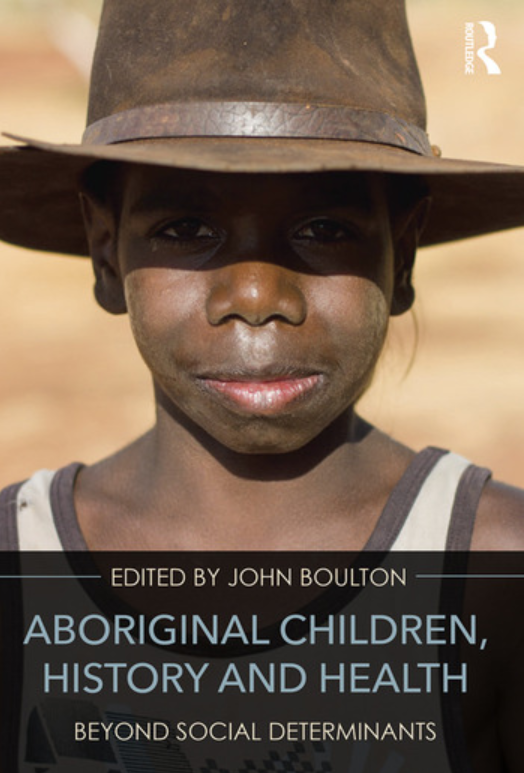
This book investigates the complex reasons for the discrepancy between the health and well-being of children in mainstream Australia and children in remote Indigenous communities. The high rate and causes of ill-health among Aboriginal children are explored through a unique blend of historical, anthropological, biological and medical analyses. Aboriginal children, history and health also includes […]
Changing the acculturation conversation: Indigenous cultural reclamation in Australia and Aotearoa/New Zealand
In constructing this chapter the authors make a claim for an Indigenous perspective that is grounded in decolonisation, the struggle for social justice, cultural reclamation and the development of Indigenous kowledges. This offers the opportunity to view acculturation and the associate research through a different lens. In taking this stance, a critical psychology, Indigenous standpoint […]
Study protocol for screening and diagnosis of fetal alcohol spectrum disorders (FASD) among young people sentenced to detention in Western Australia

Introduction Prenatal alcohol exposure can cause lifelong disability, including physical, cognitive and behavioural deficits, known as fetal alcohol spectrum disorders (FASD). Among individuals with FASD, engagement with justice services is common. Little is known about the prevalence of FASD among young people engaged with the Australian justice system. This study aims to establish FASD prevalence […]
Challenging Psychology: Reflecting on Riley’s ‘Manifesto for Change’
This paper reflects on the personal and professional implications for the colonization project of psychology critiqued by Rob Riley’s seminal address at the 1995 Australian Psychological Society conference.
Increasing Indigenous self-harm and suicide in the Kimberley: an audit of the 2005–2014 data

Suicide rates among Indigenous people in the Kimberley region of Western Australia are among the highest in the world. During the period 2001–2010, age-adjusted suicide rates among Indigenous and non-Indigenous Australians were respectively 21.4 and 10.3 per 100 000 population per year. As staff of the regional state government-funded mental health service provider, Kimberley Mental […]