
Aboriginal and Torres Strait Islander health and well-being: implications for a cognitive behavioural therapy framework

Objective: It has been acknowledged that the mental health of Aboriginal and Torres Strait Islander people has been “bedeviled” by the inappropriate application of non-Indigenous models of mental health. To enhance Indigenous health and well-being it is necessary for non-Indigenous practitioners to find a culturally safe way to enter the negotiated space of cross-cultural mental […]
‘We’re checking them out’: Indigenous and non-Indigenous research participants’ accounts of deciding to be involved in research

Background: It is important for researchers to understand the motivations and decision-making processes of participants who take part in their research. This enables robust informed consent and promotes research that meets the needs and expectations of the community. It is particularly vital when working with Indigenous communities, where there is a history of exploitative research […]
Worry boss

Worry Boss has been made with the Royal Flying Doctor Service together with communities in Central Australia. ‘Worry Boss’ is a story about anxiety. The story focuses on what makes people worry, how that makes them feel and what they can do about it.
Shared medical appointments for Aboriginal and Torres Strait Islander men

Background: Aboriginal and Torres Strait Islander health is generally the worst of any population group in Australia. Inaccessibility to health services is one possible cause of this. Shared medical appointments (SMAs) appear to be a culturally competent and appropriate way of improving access to, and the quality of, primary healthcare services for Aboriginal and Torres […]
Aboriginal children, history and health: beyond social determinants
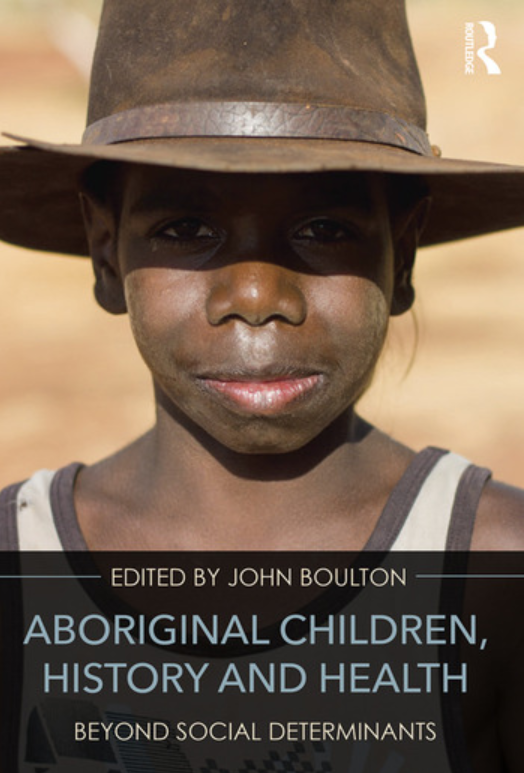
This book investigates the complex reasons for the discrepancy between the health and well-being of children in mainstream Australia and children in remote Indigenous communities. The high rate and causes of ill-health among Aboriginal children are explored through a unique blend of historical, anthropological, biological and medical analyses. Aboriginal children, history and health also includes […]
Changing the acculturation conversation: Indigenous cultural reclamation in Australia and Aotearoa/New Zealand
In constructing this chapter the authors make a claim for an Indigenous perspective that is grounded in decolonisation, the struggle for social justice, cultural reclamation and the development of Indigenous kowledges. This offers the opportunity to view acculturation and the associate research through a different lens. In taking this stance, a critical psychology, Indigenous standpoint […]
Study protocol for screening and diagnosis of fetal alcohol spectrum disorders (FASD) among young people sentenced to detention in Western Australia

Introduction Prenatal alcohol exposure can cause lifelong disability, including physical, cognitive and behavioural deficits, known as fetal alcohol spectrum disorders (FASD). Among individuals with FASD, engagement with justice services is common. Little is known about the prevalence of FASD among young people engaged with the Australian justice system. This study aims to establish FASD prevalence […]
Challenging Psychology: Reflecting on Riley’s ‘Manifesto for Change’
This paper reflects on the personal and professional implications for the colonization project of psychology critiqued by Rob Riley’s seminal address at the 1995 Australian Psychological Society conference.
Increasing Indigenous self-harm and suicide in the Kimberley: an audit of the 2005–2014 data

Suicide rates among Indigenous people in the Kimberley region of Western Australia are among the highest in the world. During the period 2001–2010, age-adjusted suicide rates among Indigenous and non-Indigenous Australians were respectively 21.4 and 10.3 per 100 000 population per year. As staff of the regional state government-funded mental health service provider, Kimberley Mental […]
Role of non-Indigenous researchers in Indigenous health research in Australia: a review of the literature

Objective This paper explores the body of knowledge around Indigenous health research and aims to outline what roles are appropriate for non-Indigenous researchers within Indigenous health research in Australia. Methods A literature review was conducted using CINAHL, PubMed and Scopus in May 2015. The search terms were ‘non-Indigenous researchers’ AND ‘Indigenous health research’ and other […]
A Radical Activist’s Manifesto for Indigenous Australian Mental Health: Rob Riley’s legacy twenty years on
In 1995, Indigenous leader and activist Rob Riley became the first Aboriginal person to deliver a keynote address at the Australian Psychological Society (APS) annual conference. He presented a manifesto for change not only for the practice of psychology but for society as a whole. Calling for recognition of Aboriginal and Torres Strait Islanders to […]
Way Forward: an Indigenous approach to well-being

Objective: Aboriginal and Torres Strait Islander individuals are overrepresented in mental health services in the state of Queensland (QLD), Australia; indicating greater prevalence and less preventative management of mental illness. This paper describes a project to enhance the model of care to improve mental health, alcohol and other drug outcomes for Aboriginal and Torres Strait […]
Our Healing: Indigenous men break the cycle of violence

On White Ribbon Day a few weeks ago the Healing Foundation celebrated the success of Our Men, Our Healing, a groundbreaking capacity-building pilot for Indigenous men in Darwin and three remote NT communities – Ngukurr, Wurrumiyanga and Maningrida. The program aims to strengthen, support and empower Aboriginal men through cultural, educational and therapeutic healing activities. […]
Lost in the great desert, preventing Aboriginal suicide

“We are working at a pace to make a real difference but in the end it will come down to governments recognising that Aboriginal and Torres Strait Islander suicide is a catastrophic humanitarian crisis. If you are an Aboriginal and Torres Strait Islander aged 15 to 35, nearly one in three deaths will be a […]
Health services explore new technology to overcome language barriers in Indigenous healthcare

With a life expectancy gap of about 10 years and poor health outcomes, some health services are looking towards new forms of technology to bridge the gap between Indigenous and non-Indigenous health services in Australia.
Developing a best practice pathway to support improvements in Indigenous Australians’ mental health and well-being: a qualitative study

Objective There is a need to adapt pathways to care to promote access to mental health services for Indigenous people in Australia. This study explored Indigenous community and service provider perspectives of well-being and ways to promote access to care for Indigenous people at risk of depressive illness. Design A participatory action research framework was […]
Gayaa Dhuwi (Proud Spirit) Declaration: National Aboriginal and Torres Strait Islander Leadership in Mental Health

The Wharerātā Group of Indigenous mental health leaders from Canada, the United States, Australia, Samoa and New Zealand developed the Wharerātā Declaration in 2010.1 It comprises five themes on the importance of Indigenous leadership in addressing the common mental health challenges faced by Indigenous peoples around the world. Member countries of the International Initiative for […]
Arnhem Land community-driven mental health program being used as case study for rest of country

A community-driven mental health program in an Arnhem Land Indigenous community is being held up as a case study for the rest of Australia. A small local team has been running the program at Galiwin’ku on Elcho Island for the past eight years, which has included support for the community in the aftermath of two […]
Cultural Responsiveness in Action – An IAHA Framework

The IAHA Cultural Responsiveness Framework provides information and support to prepare you to engage in a transformation so that, whatever your role, you can positively influence the health and wellbeing, quality of life, future aspirations, and prosperity of Aboriginal and Torres Strait Islander individuals, families and communities.
Australian Medical Association 2015 Report card on Indigenous Health

Traditional Aboriginal Healing & Western Medicine, The Missing Gap
The sixth Slice of LIME Seminar was hosted by the Poche Indigenous Health Network in Sydney, on Thursday 28th April 2016. Do we need traditional Aboriginal medicine working with western medicine to close the gap? This Close the Gap forum considered the health maintenance and traditional healing practices of Aboriginal Ngangkari in western medicine. Could […]
Increasing cultural competence and Indigenous representation in psychology

Reflections on what has/has not worked for Psychology Educators. This document was developed for the Australian Indigenous Psychology Education Project (AIPEP) ‘How To’ forum held at the APS Golden Jubilee Conference, September 2015. It provides brief points on what has and has not worked for psychology educators involved in the project when attempting to implement […]
Finding Common Ground – Avoiding the Terminology Trap

The fourth Slice of LIME Seminar was held on 27th April 2015, hosted by the University of Sydney. This event was a Poche Indigenous Health Network Key Thinkers Forum and a National Senior Teaching Fellowship activity, supported by the Office of Learning and Teaching. The forum focused on identifying and applying critical elements of cultural […]
Indigenising the Psychology Curriculum – Traps and Tips

An easy to read spreadsheet listing traps, tips, and resources for psychology educators in the process of Indigensing the psychology curriculum. This document is a work in progress, all feedback and suggestions are welcomed.
Aboriginal Children and Young People Speak Out

Since 2007, Aboriginal children and young people have participated in a range of the Commissioner’s consultation projects on topics such as wellbeing, mental health and alcohol-related harm. Additionally, the Commissioner has consulted with Aboriginal children and young people, their families and communities, during many visits to regional and remote communities from Kununurra to Albany and […]