
Development and validation of the Australian Aboriginal racial identity and self-esteem survey for 8–12 year old children (IRISE_C)

Introduction: In Australia, there is little empirical research of the racial identity of Indigenous children and youth as the majority of the current literature focuses on adults. Furthermore, there are no instruments developed with cultural appropriateness when exploring the identity and self-esteem of the Australian Aboriginal population, especially children. The IRISE_C (Racial Identity and Self-Esteem […]
The Stolen Generations: The forced removal of First Peoples children in Australia

This chapter considers the removal of Indigenous children as a global colonial and neocolonial tactic. The history of the Australian Stolen Generations is focused on, from the beginning of the abduction of children in the early 1900s up until 2015. The landmark 1997 Bringing Them Home: Report of the National Inquiry into the Separation of […]
9 Ways Native Men Can Heal From Historical Trauma

Historical trauma has taken its toll on Native people, and Clayton Small, Northern Cheyenne, founder of Native Prevention, Research, Intervention, Development, and Education, or Native P.R.I.D.E., spent years developing ways to help Native men overcome the effects.
Lost in the great desert, preventing Aboriginal suicide

“We are working at a pace to make a real difference but in the end it will come down to governments recognising that Aboriginal and Torres Strait Islander suicide is a catastrophic humanitarian crisis. If you are an Aboriginal and Torres Strait Islander aged 15 to 35, nearly one in three deaths will be a […]
Developing a best practice pathway to support improvements in Indigenous Australians’ mental health and well-being: a qualitative study

Objective There is a need to adapt pathways to care to promote access to mental health services for Indigenous people in Australia. This study explored Indigenous community and service provider perspectives of well-being and ways to promote access to care for Indigenous people at risk of depressive illness. Design A participatory action research framework was […]
Like drawing into sand’: acceptability, feasibility, and appropriateness of a new e-mental health resource for service providers working with Aboriginal and Torres Strait Islander people

Cross-cultural considerations and difficulties recruiting and retaining skilled workers in rural and remote regions may contribute to poorer service use for Aboriginal and Torres Strait Islander people. However, electronic resources may provide the opportunity for remote workforces to deliver structured, evidence-based, culturally appropriate treatments with limited training burden. The aim was to develop and determine […]
Increasing cultural competence and Indigenous representation in psychology

Reflections on what has/has not worked for Psychology Educators. This document was developed for the Australian Indigenous Psychology Education Project (AIPEP) ‘How To’ forum held at the APS Golden Jubilee Conference, September 2015. It provides brief points on what has and has not worked for psychology educators involved in the project when attempting to implement […]
Indigenising the Psychology Curriculum – Traps and Tips

An easy to read spreadsheet listing traps, tips, and resources for psychology educators in the process of Indigensing the psychology curriculum. This document is a work in progress, all feedback and suggestions are welcomed.
Decolonising Australian psychology: discourses, strategies and practice

Assessing the social and emotional well-being of Indigenous students
Indigenous people are a vulnerable and disadvantaged population whom collectively face much higher levels of health risks and challenges than non-Indigenous people. Indigenous youth in particular represent a population that are at even greater risk, as interaction between socio-economic, geographic, and cultural differences contributes to a lack of opportunity for youth to experience positive outcomes […]
Are We Asking the Right Questions? Why We Should Have a Decolonzing Discourse Based on Conscientization Rather Than Indigenizing the Curriculum

In this paper, we pose the question of terminology and definitions associated with the concept of an indigenized academy or curriculum. Calls to indigenze the academy or curriculum are implicitly asking for an overlay or inclusion of Indigenous content, preferably by Indigenous peoples, as a mechanism to incorporate histories, traditions, and knowledges that are divergent […]
A history of Indigenous psychology

This chapter discusses how the discipline and practice of psychology has been part of the colonising process influencing the mental health of Australian Aboriginal and Torres Strait Islander peoples. It outlines events where the discipline of psychology has been supportive of, and responsive to, the Aboriginal mental health movement, heralding the empowerment and inclusion of […]
Enhancing wellbeing, empowerment, healing and leadership

This chapter explores the relevance of Aboriginal perspectives of empowerment, healing and leadership, as strategies to address the social inequality and relative powerlessness of Aboriginal people in contemporary society. These Aboriginal-led strategies are key social determinants that influence Aboriginal health, mental health and social and emotional wellbeing. Programs that facilitate Aboriginal understandings of healing, empowerment, […]
Working together: Aboriginal and Torres Strait Islander mental health and wellbeing principles and practices.

The Working Together: Aboriginal and Torres Strait Islander Mental Health and Wellbeing Principles and Practice had its origins in the Australian Government’s commitment to improve mental health services nationally. The book was a key strategy to support Aboriginal and Torres Strait Islander-specific initiatives of the Council of Australian Governments (COAG) mental health reform over five […]
Teaching intercultural competencies in introductory psychology via application of the excellence in cultural experiential learning and leadership model

This article describes a pilot evaluation involving teaching and learning activities focussed on developing intercultural competencies in an undergraduate psychology unit. Specifically, first year psychology students engaged in two tasks derived from the alliance building and cultural mapping methods of an existing intercultural training resource—the Excellence in Cultural Experiential Learning and Leadership (EXCELL; Mak, Westwood, […]
A reference list for teaching about Indigenous Australians in psychology

The purpose of the list is to compile a reference list for psychology professionals who might be searching for relevant research to cover in their undergraduate courses. The list is partial and doubtless will expand in future updates. Sections include: 1) Scholarly articles 2) Coverage of relevant issues in psychology textbooks; 3) Psychology studies with […]
Working in Indigenous contexts: self-reported experiences of non-Indigenous psychologists

Despite assertions in the literature that psychologists adopt culturally inappropriate strategies for working with Indigenous clients, there is little empirical evidence about this. The aim of this study was to document the self-reported experiences of non-Indigenous psychologists working with Indigenous clients, the factors that they felt constrain these interactions, and the clinical, assessment and communication […]
Closing the gaps in and through Indigenous health research: guidelines, processes and practices

Research in Aboriginal contexts remains a vexed issue given the ongoing inequities and injustices in Indigenous health. It is widely accepted that good research providing a sound evidence base is critical to closing the gap in Aboriginal health and wellbeing outcomes. However, key contemporary research issues still remain regarding how that research is prioritised, carried […]
Indigenous psychologies and social psychology of everyday life

Engaging Indigenous content within teaching of Qualitative research in psychology

Australian universities recognise cultural competency as an essential attribute for graduates. Within this context, The Australian Psychology Accreditation Committee (APAC) has enforced requirements for students within psychology programmes to have access to Indigenous content. Though Indigenous participation rates are low, the inclusion of Indigenous content or what is often labeled ‘Indigenous psychology’ acts at least […]
Psychology and Indigenous Australians: Foundations of cultural competence

This book fills an important gap in understanding the psychological impact of colonization on Indigenous Australians. Using cultural competence as a theoretical framework, it starts with an exploration of the nature of culture and worldviews which permeates and integrates the book. It provides a convincing explanation of how colonization has affected Indigenous Australians, the role […]
Towards cultural competence: Australian Indigenous content in undergraduate psychology

This paper discusses the development and preliminary analysis of psychology undergraduate courses on cultural competence in relation to Indigenous Australians. The paper summarises the process that led to the formation of draft curriculum guidelines for psychology academics, including the need to critically examine the assumptions and history of Western psychology in relation to Indigenous peoples, […]
Empowering research with Indigenous communities

Decolonizing Social Work in Australia

Indigenous Identity in Contemporary Psychology: Dilemmas, Developments, Directions
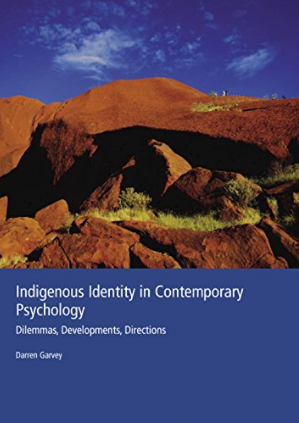
What is psychology’s place in relation to Indigenous Australian people? How do we ensure Indigenous Australians have a voice within psychology? How do I interact competently with Indigenous Australians? Thought-provoking, interactive and practical, Indigenous Identity in Contemporary Psychology: Dilemmas, Developments, Directions explores a range of issues surrounding the establishment, development and maintenance of connections between […]