
Traditional medicine plays a role alongside Western medicine

Indigenous cultures have successfully used traditional healers and bush medicine for thousands of years. Many of these practices continue to be used today. When dealing with Indigenous patients, it will help you to be aware of these practices and to understand why they are important to Indigenous Australians. You’ll also have the opportunity to learn […]
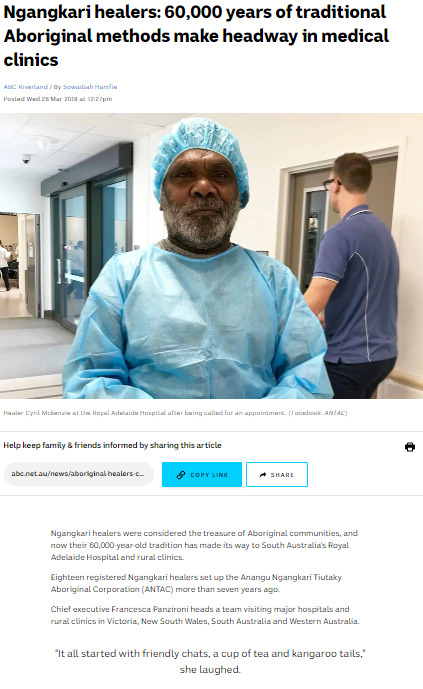
Ngangkari healers: 60,000 years of traditional Aboriginal methods make headway in medical clinics
This New Short Film Details The Horrors Of Indigenous Displacement & Incarceration First-Hand

With NAIDOC Week observances ongoing for 2021, important spotlights are being placed on the issues and systemic under-privileges that face First Nations people from the moment they are born. And thanks to a brand new short film, the first-hand horrors of displacement and a youth spent slipping through the cracks have been laid bare.
How an Aboriginal approach to mental health is helping farmers deal with drought

Psychological tools developed with Aboriginal people can also support Australian farmers whose land is suffering the effects of climate change.
Partnership for Justice in Health: Scoping Paper on Race, Racism and the Australian Health System

This discussion paper was first prepared as a scoping paper designed to assist the Partnership for Justice in Health (P4JH) consider what is offered by existing scholarship about race and racism in the health system, and in particular, to identify a research approach to support the Australian Government’s National Aboriginal and Torres Strait Islander Health […]
Aboriginal and Torres Strait Islander Health in General Practice: An introduction to teaching and learning

This guide sets out how GP Supervisors can strengthen teaching and learning about Aboriginal and Torres Strait Islander health.
An introduction to Aboriginal and Torres Strait Islander health cultural protocols and perspectives
This document provides a guide to appropriate and respectful behaviour with Aboriginal and Torres Strait Islander people. It is intended to give RACGP members and staff background information and guidance on Aboriginal and Torres Strait Islander perspectives, along with an understanding of important protocols and other relevant cultural issues. It can be used to guide […]
Aboriginal Participatory Action Research: An Indigenous Research Methodology Strengthening Decolonisation and Social and Emotional Wellbeing

This discussion paper explicates the concepts and application of a critically reflexive and transformative Indigenous Research Methodology (IRM) — Aboriginal Participatory Action Research (APAR) — designed to centre and increase Indigenous voice and ‘epistemic self-determination’ in Indigenous research and psychology. The intent is to justify and legitimate Indigenous knowledges and methodologies as authentic, rightful, valued, […]
Wellbeing and Healing Through Connection and Culture

This review summarises the emerging research and knowledge, key themes and principles surrounding Aboriginal and Torres Strait Islander cultural perspectives and concepts of healing and social and emotional wellbeing as they relate to suicide prevention. These discussions will support Lifeline to enhance and refine their existing knowledge and practices to promote culturally responsive suicide prevention […]
Ahpra Aboriginal and Torres Strait Islander Employment Strategy 2020-2025
“Every client has a trauma history”: Teaching respectful relationships to marginalised youth. An evaluation of NAPCAN’s Respectful Relationships Program Northern Territory 2017-2018.

This report presents findings from a research evaluation of a one-year program run by NAPCAN in the Northern Territory which sought to develop a trauma-informed approach to Respectful Relationships Education (RRE). The program was undertaken under contract with Territory Families, and focused on providing training in traumainformed RRE to staff in the youth services sector […]
Improving Housing and Service Responses to Domestic and Family Violence for Indigenous Individuals and Families

This study investigated the needs of Indigenous women and children who are severely over-represented in rates of domestic and family violence (DFV). Developing culturally appropriate responses to Indigenous DFV and improving integration between housing and DFV and child protection services should reduce rates of Indigenous women’s injury and death, as well as rates of Indigenous […]
What the people said: Findings from the regional Roundtables of the Aboriginal and Torres Strait Islander Suicide Prevention Evaluation Project

This paper summarises key findings from the six community regional Roundtables that were undertaken as part of the Australian Aboriginal and Torres Strait Islander Suicide Prevention Evaluation Project. The six community regional Roundtables were held in different locations across the country. Common themes emerging included the need for self-determination and local leadership, the need to […]
Healing for Our Stolen Generations: sharing our stories

This report is a review of the first two years of projects funded under the Healing Foundation’s Stolen Generations Initiative 2013-2015.
Close the Gap – Progress and priorities report 2016

This report from the Close the Gap Campaign Steering Committee provides an overview of the progress made over the life of the Closing the Gap strategy. Results are mixed, with some improvements in infant and child health, while progress on closing the life expectancy gap has been minimal. The report also looks at new insights […]
Illawarra Aboriginal community profile: a snapshot of an urban Aboriginal community

This community profile report provides information about the Aboriginal population of the Illawarra Region. It is intended to begin a discussion about how research can contribute to the social health and wellbeing of Aboriginal people. The report highlights disparities between Indigenous and non-Indigenous Australians that are apparent not only in the health statistics but also […]
Review of illicit drug use among Aboriginal and Torres Strait Islander people

The purpose of this review is to provide an overview of the use of illicit drugs among Aboriginal and Torres Strait Islander people in Australia. It provides general information on the context of illicit drug use in Australia and the factors of particular relevance to Aboriginal and Torres Strait Islander people, including the historical context, […]
Study of Environment on Aboriginal Resilience and Child Health

SEARCH, the Study of Environment on Aboriginal Resilience and Child Health, is Australia’s largest long-term study of the health and wellbeing of urban Aboriginal Children. An estimated 60% of the health gap between Aboriginal and non-Aboriginal people in Australia is attributable to the health of people living in non-remote, urban areas. While 57% of the […]
Disability support services: services provided under the National Disability Agreement 2014–15

In 2014–15, around 333,800 people used disability support services under the National Disability Agreement (NDA), including around 1,900 who transitioned to the National Disability Insurance Scheme (NDIS) during the year. Many (44%) had an intellectual or learning disability, more than half (52%) lived with their families, and close to one-third (30%) of those aged 15 […]
High school outreach in remote northwest Queensland

The QIMR Berghofer’s Science and Young Minds project aimed to inspire the scientists and medical professionals of tomorrow by relaying the importance of medical research and health-related professions in an integrated school education and capacity building program. Focussing on skin health, the project included the development and delivery of science workshops to senior high school […]
Aboriginal and Torres Strait Islander people with a mental health condition
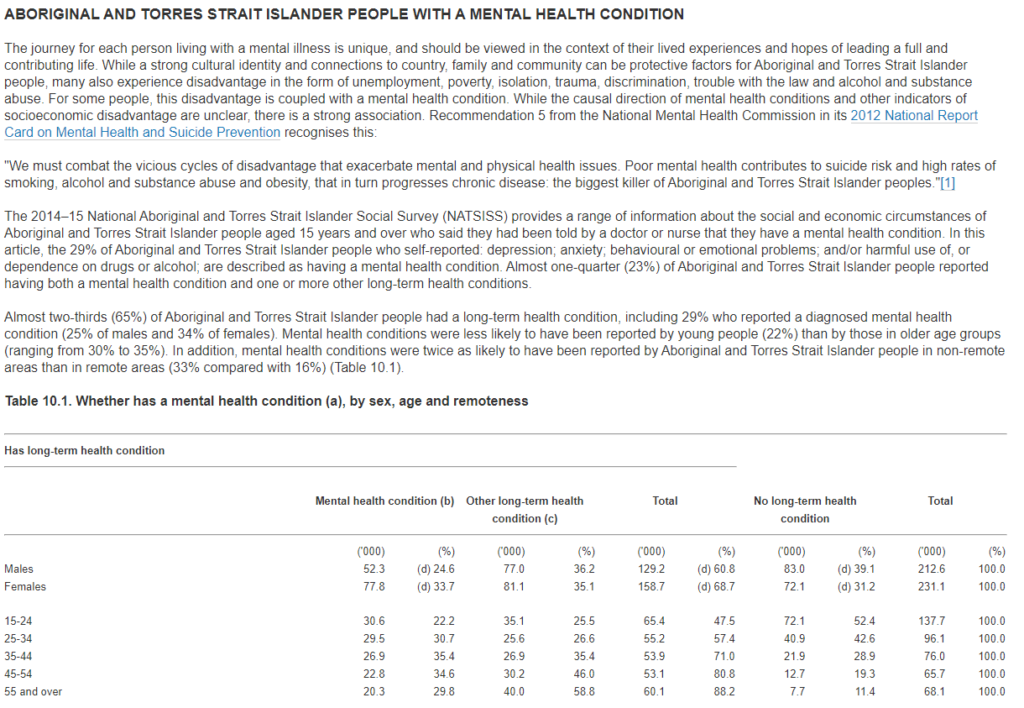
The 2014–15 National Aboriginal and Torres Strait Islander Social Survey (NATSISS) provides a range of information about the social and economic circumstances of Aboriginal and Torres Strait Islander people aged 15 years and over who said they had been told by a doctor or nurse that they have a mental health condition. In this article, […]
Is funder reporting undermining service delivery? compliance reporting requirements of Aboriginal community controlled health organisations in Victoria
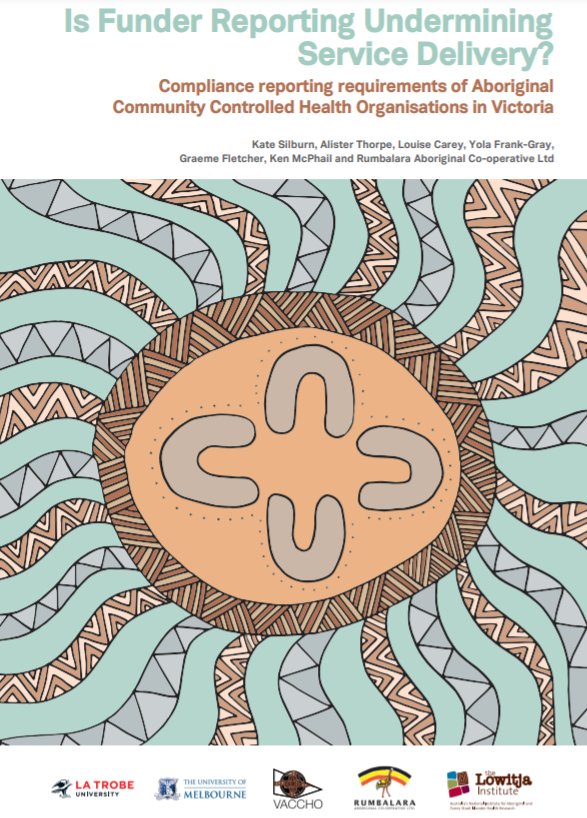
This paper describes a case study of the compliance and reporting requirements of Rumbalara Aboriginal Co-operative. It demonstrates that on top of the reporting overburden, incredible complexity is introduced when single organisations work across a range of health and community service sectors and consequently have to report in different ways, on different performance criteria, using […]
Aboriginal and Torres Strait Islander health organisations: Online Services Report—key results 2014–15

This seventh national report presents information from 278 organisations across Australia, funded by the Australian Government to provide one or more of the following health services to Aboriginal and Torres Strait Islander people: primary health care, maternal and child health care, social and emotional wellbeing services, and substance-use services. These organisations participated in the 2014–15 […]
Who Cares and does it matter for the labour market? A longitudinal analysis of the labour force status of Indigenous and non-Indigenous carers

Indigenous Australians experience higher rates of severe or profound disability than other Australians, and the gap in rates of disability between Indigenous and non-Indigenous Australians increases with age. The relatively high rates of disability among the Indigenous population corresponds with heavy caring burdens. It has been well established that carers of a person with a […]
Supporting Aboriginal mental health workers: research into perspectives on system change

This report is an evaluation of the Aboriginal Mental Health Workers (AMHW) program in remote northern Australia, and highlights the perspectives and experiences of Aboriginal Health Workers. The study included the perspectives of six Aboriginal Mental Health Workers from three sites across northern Australia, in addition to consultation with multiple stakeholders, including clinic managers and […]