
Closing the gaps in and through Indigenous health research: guidelines, processes and practices

Research in Aboriginal contexts remains a vexed issue given the ongoing inequities and injustices in Indigenous health. It is widely accepted that good research providing a sound evidence base is critical to closing the gap in Aboriginal health and wellbeing outcomes. However, key contemporary research issues still remain regarding how that research is prioritised, carried […]
Racism, social resources and mental health for Aboriginal people living in Adelaide

Background: This paper examines whether reported experience of racism by Aboriginal people living in Adelaide is negatively associated with mental health, and whether social resources ameliorate the mental health effects of racism. Methods: Face-to-face structured and semi-structured interviews were conducted with 153 Aboriginal people. Data on self-reported experiences of racism (average regularity of racism across […]
The effects of a common in-group prime on intentions to help Indigenous and homeless Australians

The article reports on research designed to test Australian attitudes towards helping impoverished members of the Australian society, in particular, indigenous and homeless people. Australian university students completed a questionnaire to measure their attitudes towards helping homeless and indigenous people under conditions that primed a common Australian identity. The findings showed that priming an inclusive […]
Strong and smart: Towards a pedagogy for emancipation: Education for first peoples

Turning the corner: assessment as a key strategy to enhance greater engagement and understanding in Indigenous health
Background: Developing a culturally competent health workforce is a key strategy in the struggle to provide quality healthcare services for Aboriginal people. Since 2000, the Centre for Aboriginal Medical and Dental Health has implemented a comprehensive vertically and horizontally integrated Aboriginal health curriculum across the 6 year MBBS program at the University of Western Australia. […]
Creating the NACCHO Cultural Safety Training Standards and Assessment Process: A background paper.

The purpose of this paper is to provide the CST Standards Committee and Industry Reference Group with an overview of issues relevant to Cultural Safety and Cultural Safety Training. This will help guide CST Standards Committee decisions on what the Standards and the CST training program assessment process should be, and the Industry Reference Group […]
Changing the lens: Indigenous perspectives on psychological literacy

An essential form of psychological literacy that is required in all psychology courses is an understanding of and ability to work with the many cultural groups that make up a given society. Psychology as a profession is part of a society that is shaped and directed by the history, values, norms and biases that characterise […]
The health, social and emotional well being of Aboriginal women

Racism as a determinant of social and emotional wellbeing for Aboriginal Australian youth

Objective: To explore the associations between self-reported racism and health and wellbeing outcomes for young Aboriginal Australian people. Design, setting and participants: A cross-sectional study of 345 Aboriginal Australians aged 16–20 years who, as participants in the prospective Aboriginal Birth Cohort Study, were recruited at birth between 1987 and 1990 and followed up between 2006 […]
Racism and health among urban Aboriginal young people

Background: Racism has been identified as an important determinant of health but few studies have explored associations between racism and health outcomes for Australian Aboriginal young people in urban areas. Methods: Cross sectional data from participants aged 12-26 years in Wave 1 of the Victorian Aboriginal Health Service’s Young People’s Project were included in hierarchical […]
Responding to racism: Insights on how racism can damage health from an urban study of Australian Aboriginal people

This paper examines responses to racism and the pathways through which racism can affect health and wellbeing for Aboriginal people living in an urban environment. Face-to-face interviews were conducted in 2006/07 with 153 Aboriginal people living in Adelaide, Australia. Participants were asked about their experience of, and responses to, racism, and the impact of these […]
Psychological and cognitive assessment of Indigenous Australians

Objective: The aim of the present review was to evaluate the psychological and cognitive assessments that have been considered suitable for Indigenous Australians. This will provide a basis from which future developments can occur, leading to improved mental health services for Indigenous Australians. Method: Literature searches of key health science databases were conducted using the […]
Psychometric validation of the Growth and Empowerment Measure (GEM) applied with Indigenous Australians

Objective: Empowerment is a complex process of psychological, social, organizational and structural change. It allows individuals and groups to achieve positive growth and effectively address the social and psychological impacts of historical oppression, marginalization and disadvantage. The Growth and Empowerment Measure (GEM) was developed to measure change in dimensions of empowerment as defined and described […]
Indigenous Suicide and Colonization: The Legacy of Violence and the Necessity of Self-Determination

Contemporary indigenous first nations psychologists have developed an alternative frame for viewing suicide that not only shifts the focus from individual-level to group-level explanations, but challenges discourses that position group-level influences as “risk factors” that can be easily subsumed within standard repertoires for suicide prevention. First nations psychologists show the violent legacy of colonization has […]
Binan Goonj: bridging cultures in Aboriginal health

Despite years of research, policy changes and interventions, it is widely documented that the health status of many Aboriginal people remains the poorest in Australia. Binan Goonj, 3rd Edition: Bridging cultures in Aboriginal health explores the processes and practices underlying this situation, while providing practical strategies to work towards redressing it. Key Features · completely […]
The Boatshed Racism Roundtable Declaration

Over 40 leading researchers and academics from across Australia met at the University of Western Australia Boatshed in Perth, to discuss research concerning racism towards Aboriginal and Torres Strait Islander Australians. The two-day meeting significantly advanced the themes of social justice and reconciliation in Australian society and has culminated in the production of a detailed […]
Mental health and the Indigenous peoples of Australia and New Zealand
Milroy, H. (2009). Mental health and the Indigenous peoples of Australia and New Zealand. In M. Durie, H. Milroy & E. Hunter (Eds.) Transcultural Psychiatry.
Living on the edge: social and emotional wellbeing and risk and protective facots for serious psychological distress among Aboriginal and Torres Strait Islander people

This paper has been prepared by the Australian Indigenous Psychologists Association (AIPA) to generate discussion around the determinants of Indigenous social and emotional wellbeing (SEWB), and to provide a range of recommendations for addressing the current gap in social and emotional wellbeing between Indigenous and non-Indigenous Australians.
Let the healing begin: Response to the government to the national apology to the Stolen Generations. Transcript of Speech to the Member’s Hall, Parliament House, Canberra

Tom Calma, Aboriginal and Torres Strait Islander Social Justice Commissioner, Australian Human Rights and Equal Opportunity Commission, response to government to the national apology to the Stolen Generations.
Theory to social action: A university-based strategy targeting prejudice against Aboriginal Australians

The level of racism in Australia against Aboriginal Australians is well documented. This has an extremely detrimental effect on the health and wellbeing of Aboriginal Australians. One part of the solution may be anti-prejudice strategies, but to date few strategies that include a pre-test and a post-test assessment have been conducted in Australia. The present […]
Finding our relatedness stories: Psychology and Indigenous Healing Practice

Liyarn Ngarn

Documentary by singer songwriter Archie Roach, the late Pete Postlethwaite and Aboriginal elder Patrick Dodson. (Out of print but available from libraries) Duration: 70 mins
Indigenous Identity in Contemporary Psychology: Dilemmas, Developments, Directions
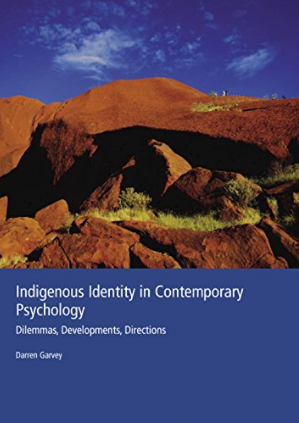
What is psychology’s place in relation to Indigenous Australian people? How do we ensure Indigenous Australians have a voice within psychology? How do I interact competently with Indigenous Australians? Thought-provoking, interactive and practical, Indigenous Identity in Contemporary Psychology: Dilemmas, Developments, Directions explores a range of issues surrounding the establishment, development and maintenance of connections between […]
Aboriginal and non-Aboriginal Australia: The dilemma of apologies, forgiveness, and reconciliation

This article presents a qualitative study of the indigenous Australian perspective on reconciliation with nonindigenous Australia, with a focus on the role of an apology for the oppression and violence perpetrated by nonindigenous Australians, and forgiveness on the part of indigenous Australians. A brief historical analysis of the relationship between Aborigines and waves of settlers […]
Constructing racism in Sydney, Australia’s largest EthniCity

Contemporary Australia is in a contradictory situation as a nation where multiculturalism co-exists with various forms of what are collectively called racisms. Based on a survey of Sydney residents, this study uses a social constructivist approach to investigate the nature and sociospatial context of racist attitudes in Sydney, Australia’s largest EthniCity. Results show a mix […]